God’s Storehouse: An Organizational Development Case Study
For more than 37 years, God's Storehouse has been a cornerstone of food security in Danville and Pittsylvania County, Virginia. With a mission to collect and distribute food, promote nutrition, and connect neighbors to local resources, the organization reaches thousands of households annually through a Food Pantry, Food Recovery Program, Backpack Program, Urban Farm, and One Stop Shop. In 2025 alone, the organization distributed over 2 million pounds of food across more than 32,000 boxes, powered almost entirely by 16,000+ volunteer hours. As God's Storehouse looked toward the future, Executive Director Karen Harris wanted to take a deliberate look at the systems, structures, and strategies holding everything together, and find honest answers about where there was room to grow. That is where The Spark Mill came in.
The Spark Mill was engaged to conduct a comprehensive Organizational Development assessment; examining operations, people, technology, and resources through the lens of what was working, what needed to change, and where efficiencies could be found. The process included an onsite observation of a full distribution day, a client survey, a staff working session, and a board retreat. The result was a detailed Operational Business Model Plan organized around five pillars: People Power, Process Flow, Technology, Resource Engine, and Governance & Accountability.
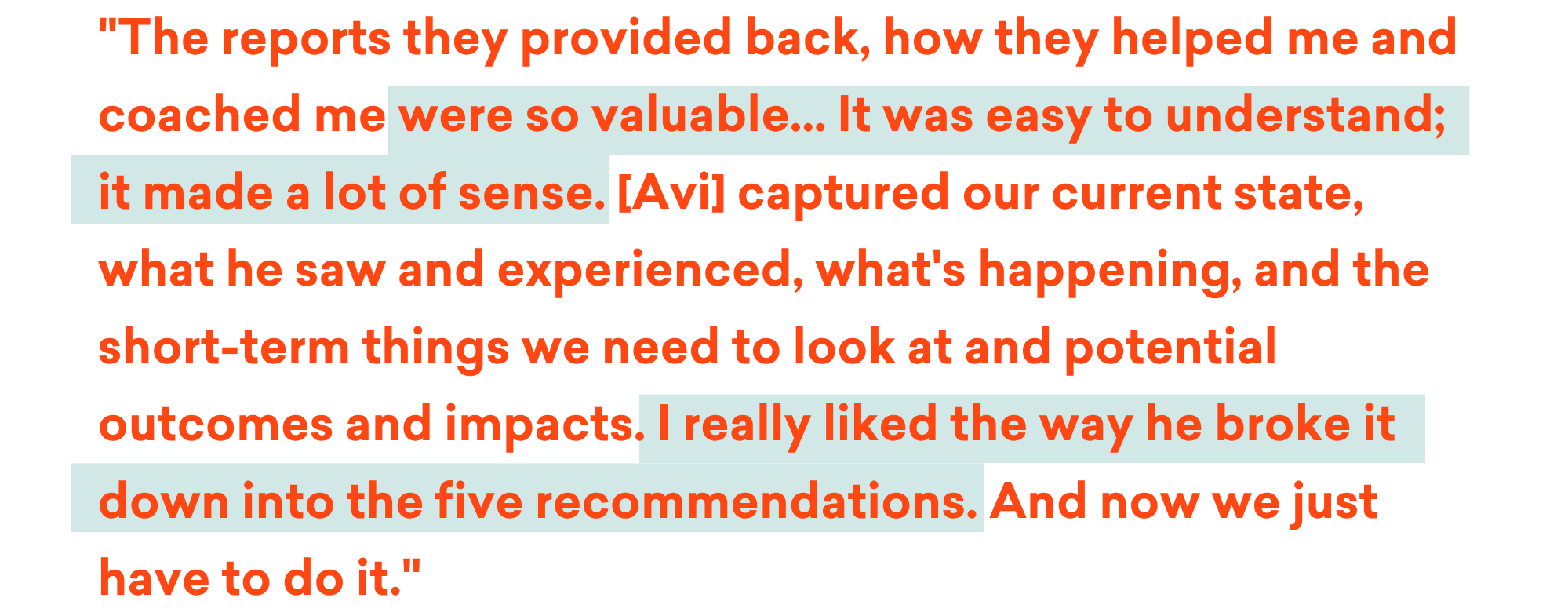
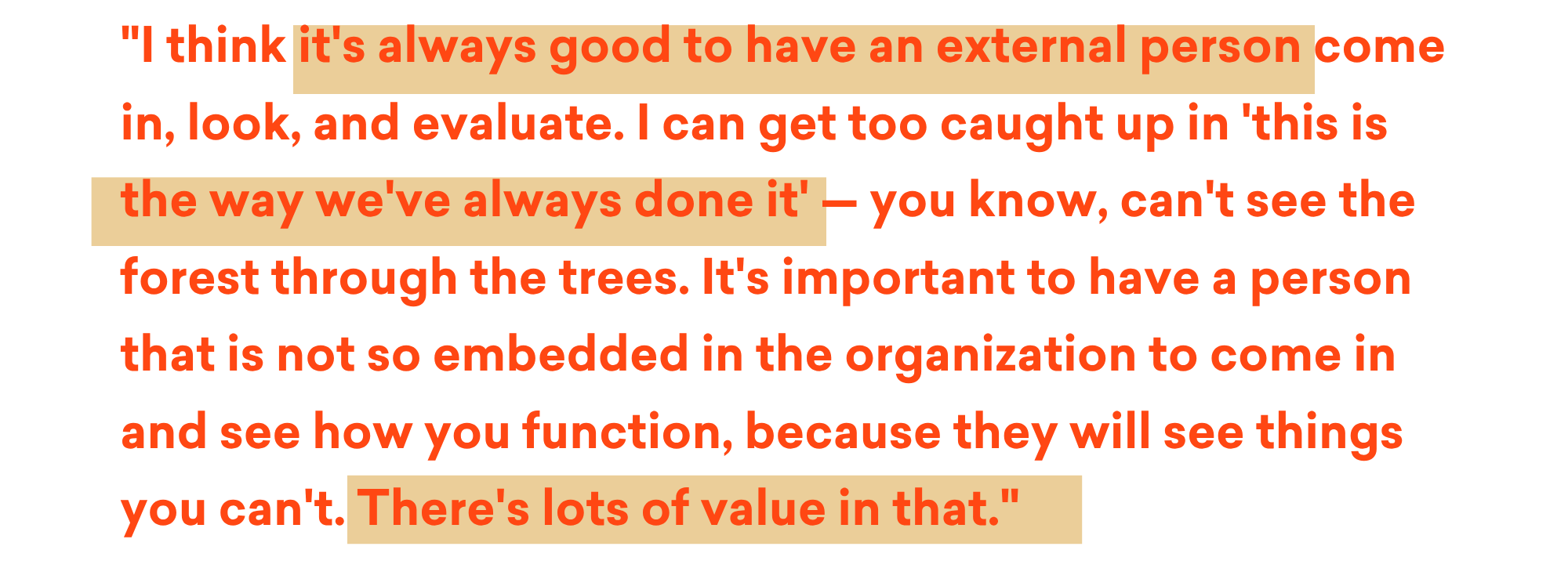
One of the most consistent themes from Karen's experience was the value of having an outside perspective. God's Storehouse runs hard getting food out the door every week, sustaining deep relationships with the community, and doing meaningful work, and that pace can make it difficult to see where things could flow better. The Spark Mill's process created the space and structure to step back and take stock. The customer survey was particularly eye-opening; for years, the organization had suspected that its hours weren't fully accessible to working families and caregivers, but it lacked data to act on that hunch. The survey confirmed it and provided the evidence needed to move forward with exploring expanded distribution hours, including a potential Saturday model.
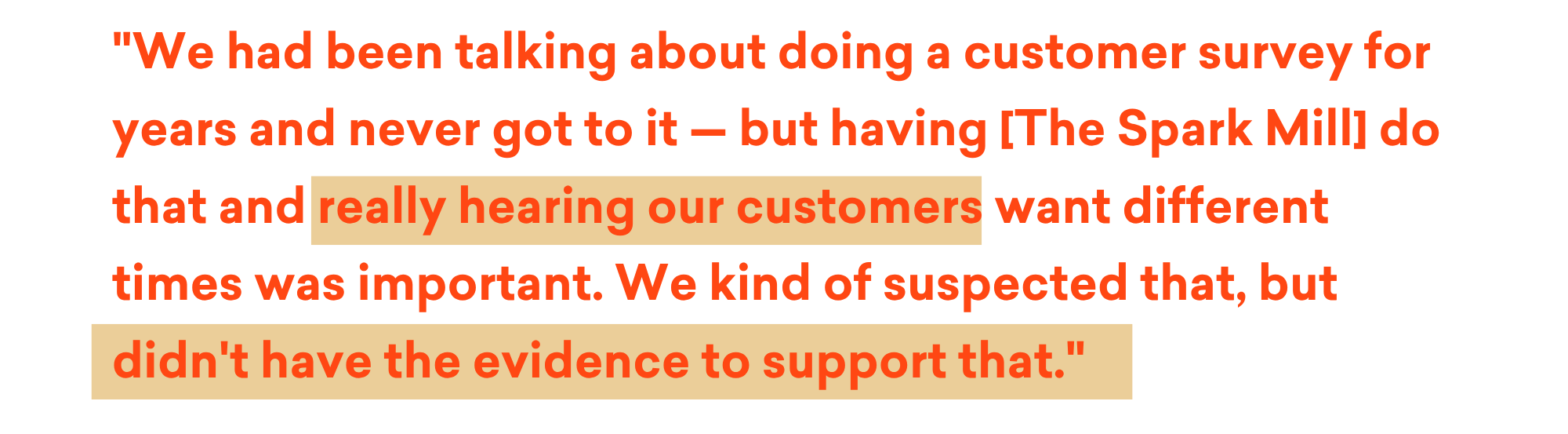
A central recommendation from the Operational Business Model Plan was the development of Standard Operating Procedures (SOPs) and clearer role definition across the organization; and Karen's team has been putting that work into practice. The plan identified that key workflows were relying heavily on institutional knowledge, with inconsistent training across volunteer roles and limited cross-training to cover gaps. Their newly hired Assistant Director quickly recognized the same needs and began formalizing more clarified processes. Monthly reports, food distribution protocols, and volunteer orientation are among the areas now being documented and standardized.
The Spark Mill also recommended establishing Volunteer Captain roles — designated leads for intake, warehouse, and distribution shifts — to reduce staff burden and create more consistent oversight on the floor. This shift has already made a visible difference in the distribution process. By clarifying who does what and when, the experience became more organized for both volunteers and the clients they serve.
God's Storehouse thrives on its people and The Spark Mill's assessment reinforced that investment in volunteers and staff can go a long way toward building the kind of sustainable, people-centered capacity they depend on. With over 16,000 volunteer hours logged annually and staff frequently filling coverage gaps, sustainable capacity requires intentional recruitment, cross-training, and recognition. The plan called for structured volunteer orientations, spotlight recognition through newsletters and social media, and an emphasis on making volunteers valued beyond the time they give. God's Storehouse launched a volunteer orientation for community service workers and is building toward more formal recognition practices.
The organization is also leaning into its faith-based relationships, exploring a model where congregations "adopt" a month of food collection, bringing in canned goods and other pantry staples on behalf of God's Storehouse. This approach builds on existing community goodwill while creating a more sustainable and distributed supply pipeline.
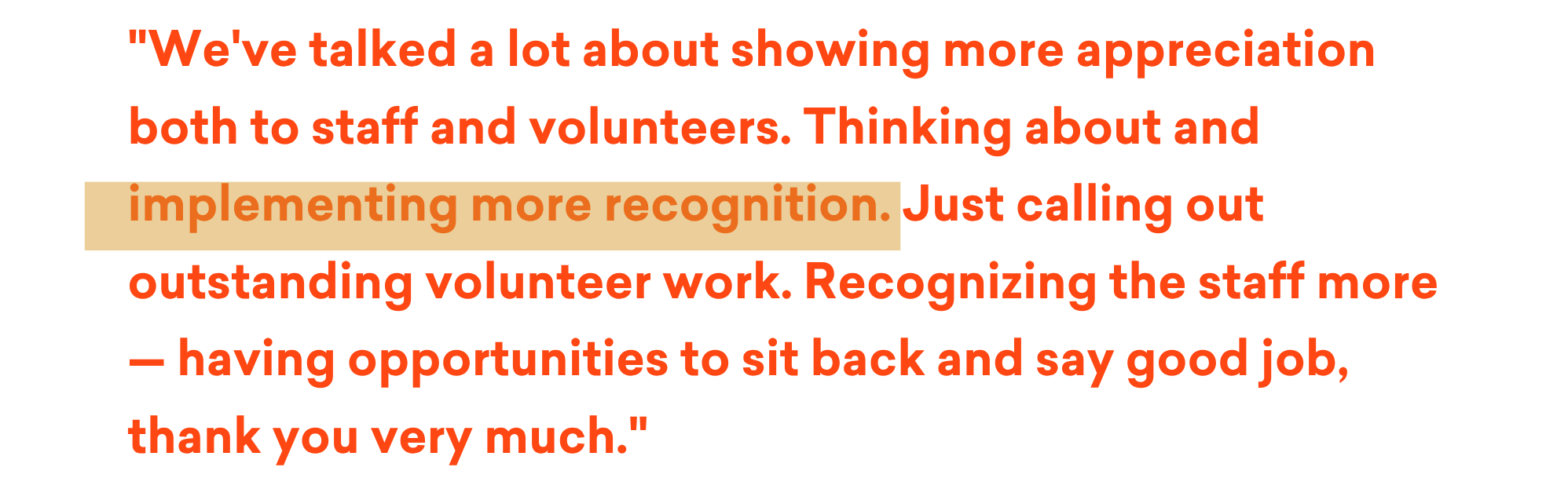
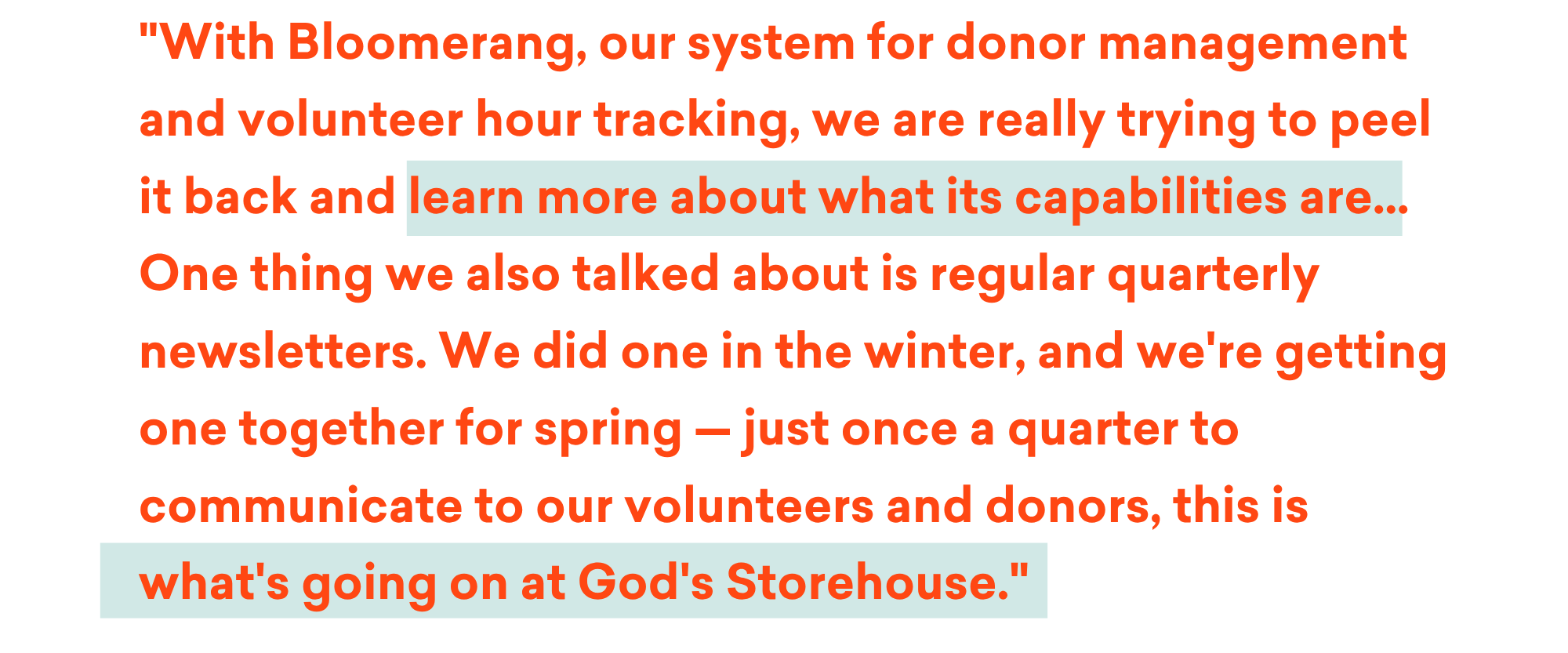
The plan identified data and communications as two areas where intentional investment could significantly multiply God's Storehouse's reach and effectiveness. The organization uses Bloomerang for donor management and volunteer tracking, but had not yet fully explored its capabilities. The Spark Mill recommended unlocking the platform’s full potential for tracking volunteer metrics, improving donor acknowledgment, and building a unified dashboard that keeps the board informed. On the communications side, the plan called for regular quarterly newsletters to keep donors and volunteers connected to the work which the organization has already begun sharing with their community.
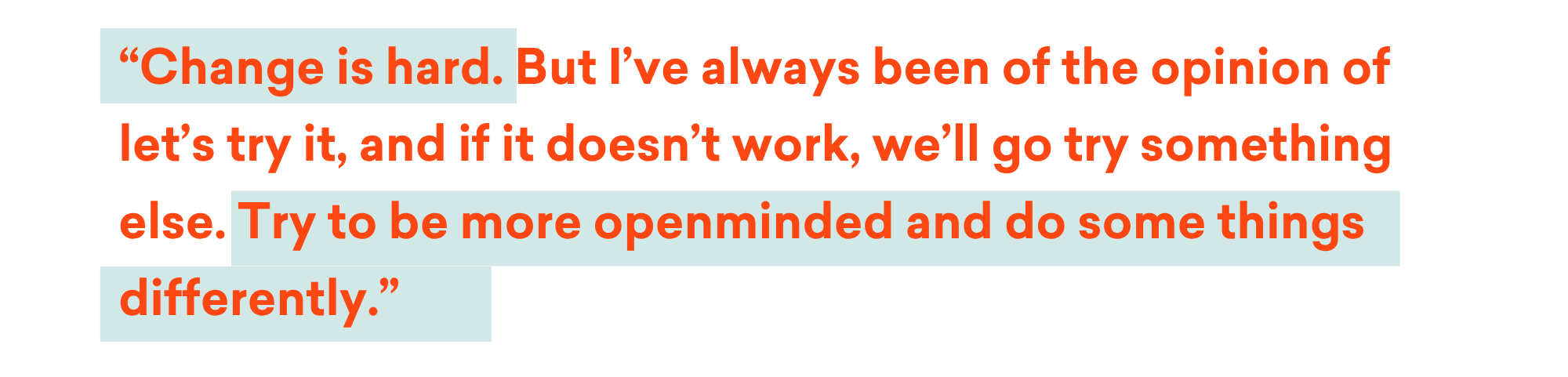
Perhaps the most resonant theme from Karen's reflection is simply this: change is hard, but possible, especially with the right support and mindset. God's Storehouse has spent decades doing work that matters. What The Spark Mill helped surface was a path toward doing that work in ways that are more sustainable, more accessible, and more equipped for the future. The organization is moving forward with more cross-trained volunteers, clearer SOPs, a renewed commitment to community access, and ongoing conversations about what else is possible. Karen has internalized something that she hopes will stay embedded in the organization's culture: being open to an outside eye, to trying new things, and to not letting "the way we've always done it" be the ceiling.
The Spark Mill partnered with God's Storehouse in 2025 to develop their Operational Business Model Plan. To learn more about God's Storehouse and their work in the Danville community, visit godsstorehouse.org.