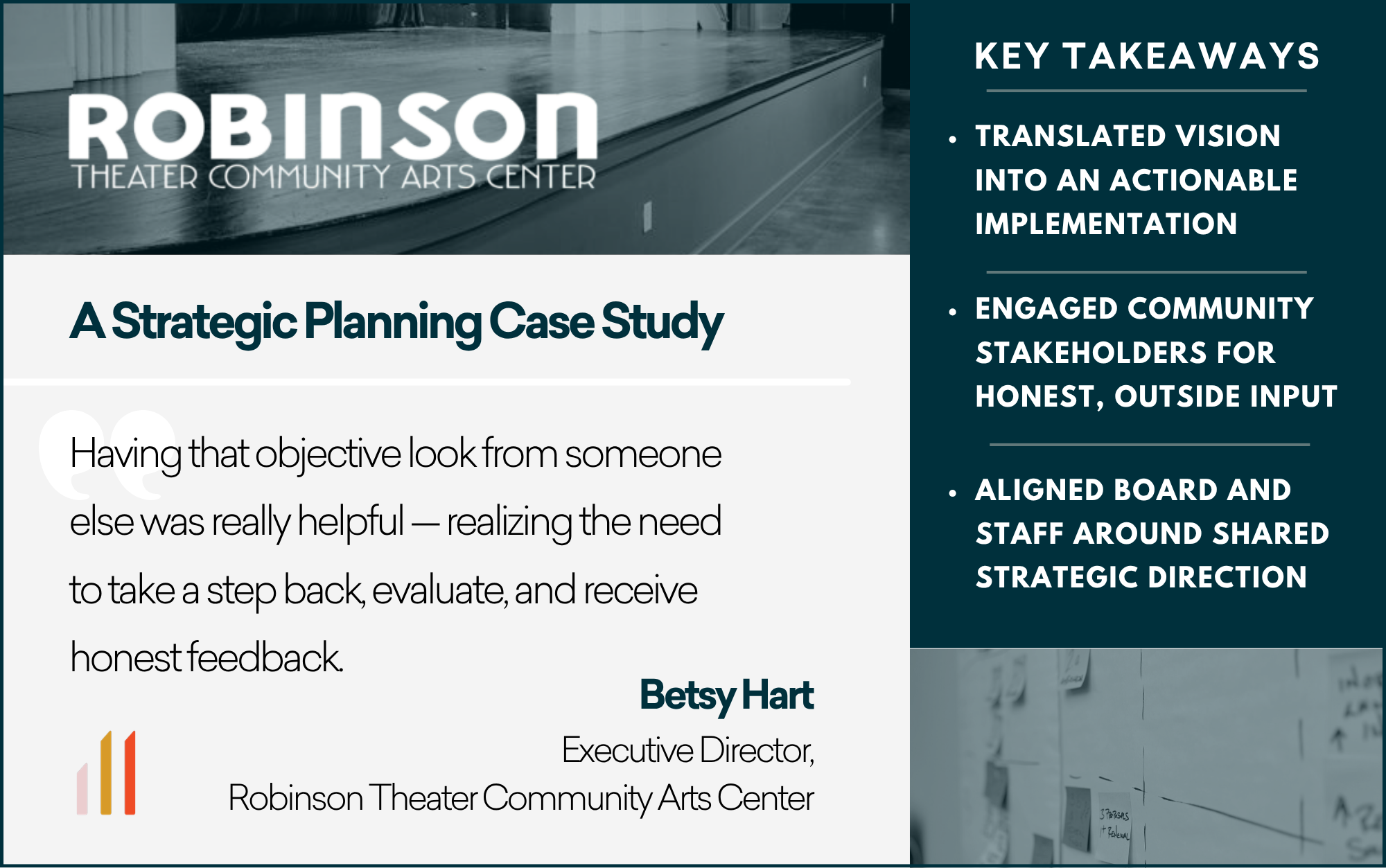
Robinson Theater Community Arts Center: A Strategic Plan Case Study
For nearly two decades, Robinson Theater Community Arts Center has been a steady presence in Richmond’s East End, running arts, fitness, and nutrition-based programs out of a restored 1937 movie house in Church Hill. What began as a lean operation with one full-time staff member holding the organization down had started to carry bigger dreams, and the gap between those dreams and the team’s capacity to act on them became more apparent. Robinson partnered with The Spark Mill in 2023 looking for the kind of outside perspective that could help them step back from the day-to-day, name what they were actually capable of, and turn big-picture thinking into a strategic plan they could execute. In June, we caught up with the Executive Director of Robinson Theater Community Arts Center, Betsy Hart, to reflect on the project three years into implementing that plan to see where they are now.
A Clear-Eyed Look from the Outside
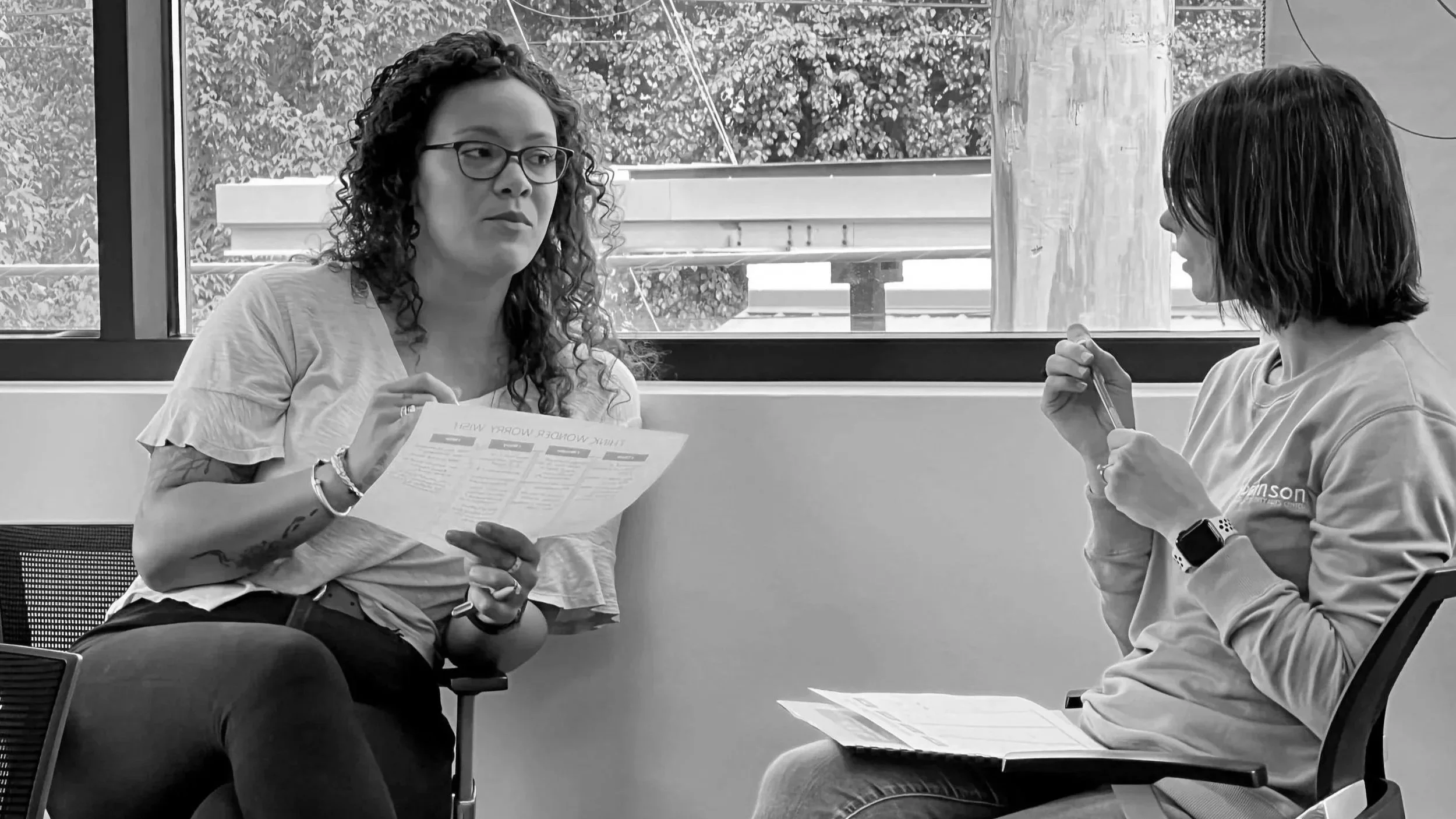
Betsy knew the organization needed honest input from perspectives beyond those closest to the work, staff, and board. The Spark Mill stepped in to facilitate those conversations directly, creating space for people to speak candidly to a third party in a way they might not have with the organization in the room. What came back from their community was a pleasant surprise in its consistency: confirmation that Robinson was already moving in the right direction. That kind of validation, paired with an outside set of eyes, gave the organization confidence to trust its own direction and keep moving forward with a clearer sense of what could come next.
“You get into the daily grind when you’re in the organization and only know your own perspective. Having that objective look from someone else was really helpful — realizing the need to take a step back, evaluate, and receive honest feedback.”
Turning Vision into a Working Roadmap
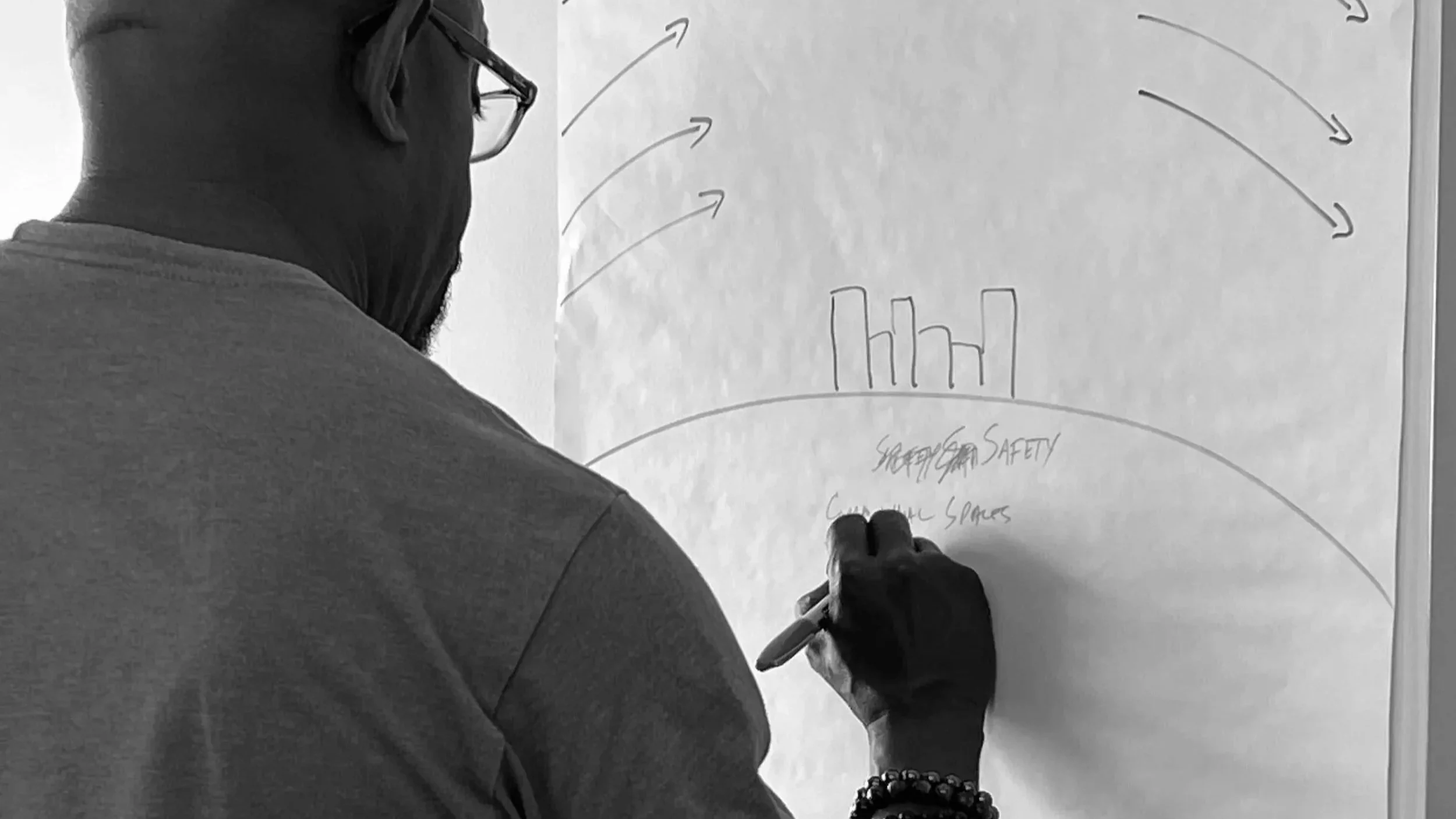
By the time Robinson sat down with The Spark Mill, the dreaming had already begun. What the organization needed next was a way to put that vision into motion. The strategic plan and implementation roadmap gave Robinson clear ownership, deadlines, and milestones, translating big-picture goals into assignments someone could be accountable for. The results followed quickly: a staff of two grew to include a venue manager, program coordinators, a program manager, and a fund development director, while the organization moved toward acquiring its building and expanded into additional program and office space. By February 2025, Robinson had become its own employer entirely, a milestone in sustainability that had been part of the plan from the start.
“The deadlines in the implementation plan were helpful when we wanted to get down to the details of who owns what. We were able to visualize the dreams and bring them down to operations, while having a roadmap to see if we’re staying on the path and the milestones we needed to hit.”
Naming the Need Out Loud
One of the quieter shifts to come out of the planning process was around relationships, and specifically, how comfortable Robinson was with asking for what the organization needs. The plan reinforced the value the organization already placed on connection with neighbors, partners, and businesses across the East End, but it also surfaced a gap: there was room to invite people into that investment more often. Hearing directly from stakeholders that people wanted to help and were simply waiting to be asked, changed how the organization approached fund development. The planning process did similar work internally, giving the board a shared language and a shared understanding of what Robinson is and does, something that’s mattered even more as new staff have joined since.
“One of the interviewees mentioned we didn’t ask enough. It was helpful to learn that people are ready to help. It’s their investment in the community, and our job to invite them to support the Robinson.”
Looking Ahead
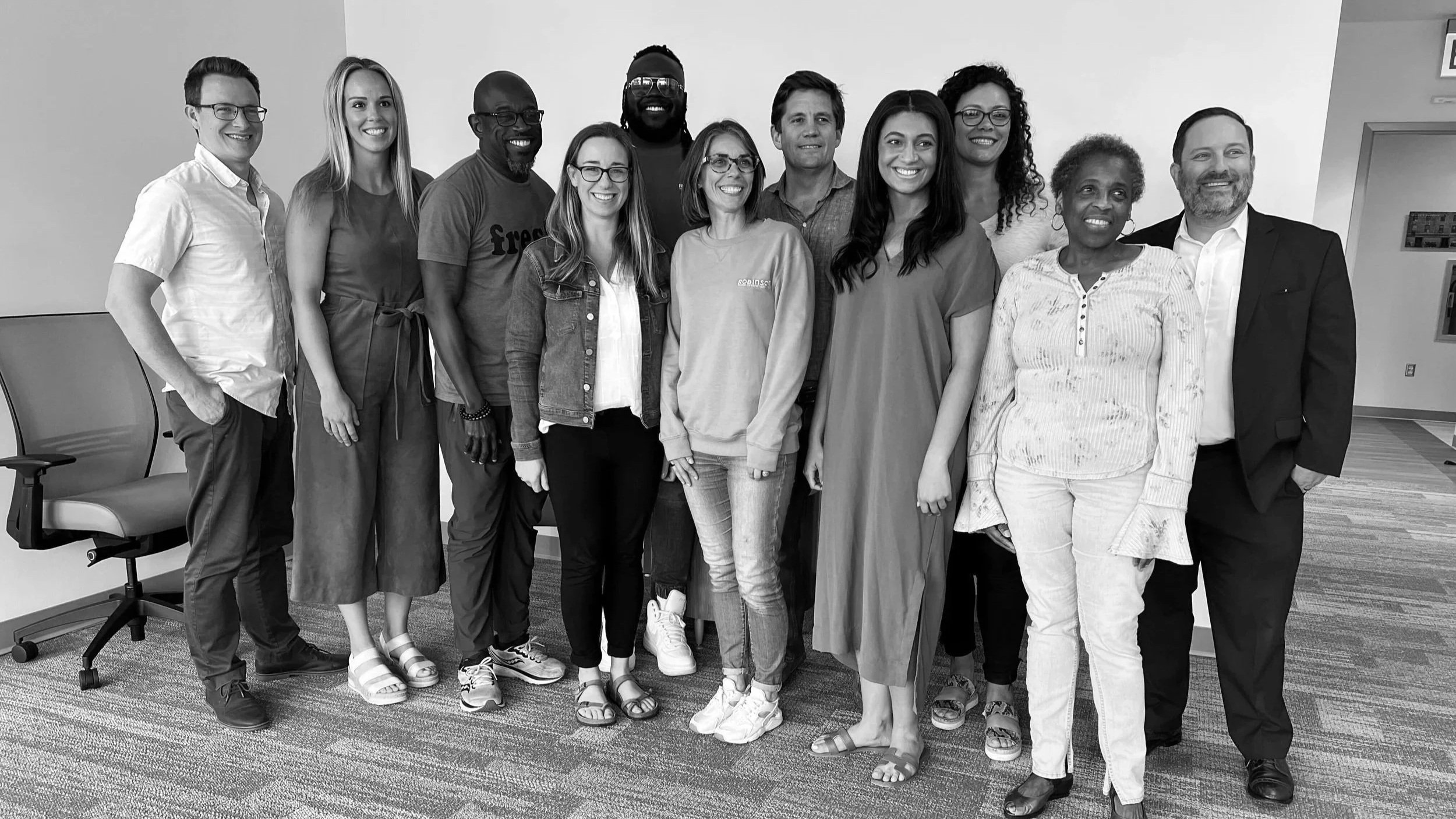
Robinson Theater Community Arts Center is no longer working from instinct alone. It has a plan in action, a growing team, and a roadmap the organization continues to return to to as it keeps building. The horizon looks bright: the organization is in its early, whispered stages of a capital campaign tied to the long-standing goal of owning its building outright, with the infrastructure and staffing in place to support that next chapter. The confirmation and encouragement that came out of the planning process haven’t faded either; they’ve become part of how Robinson talks about itself and welcomes others in. With its strategy now woven into daily operations, Robinson is positioned to keep growing into the role it has long played for the East End, deliberately, and alongside a plan and team to back it up.
“Overall, we were very blown away by the encouragement, from the facilitated group time we had together to hearing from stakeholders. The Preliminary Findings Report brought me to tears. It was amazing to have such a boost of confirmation from the community.”