Williamsburg House of Mercy: A Strategic Planning Case Study
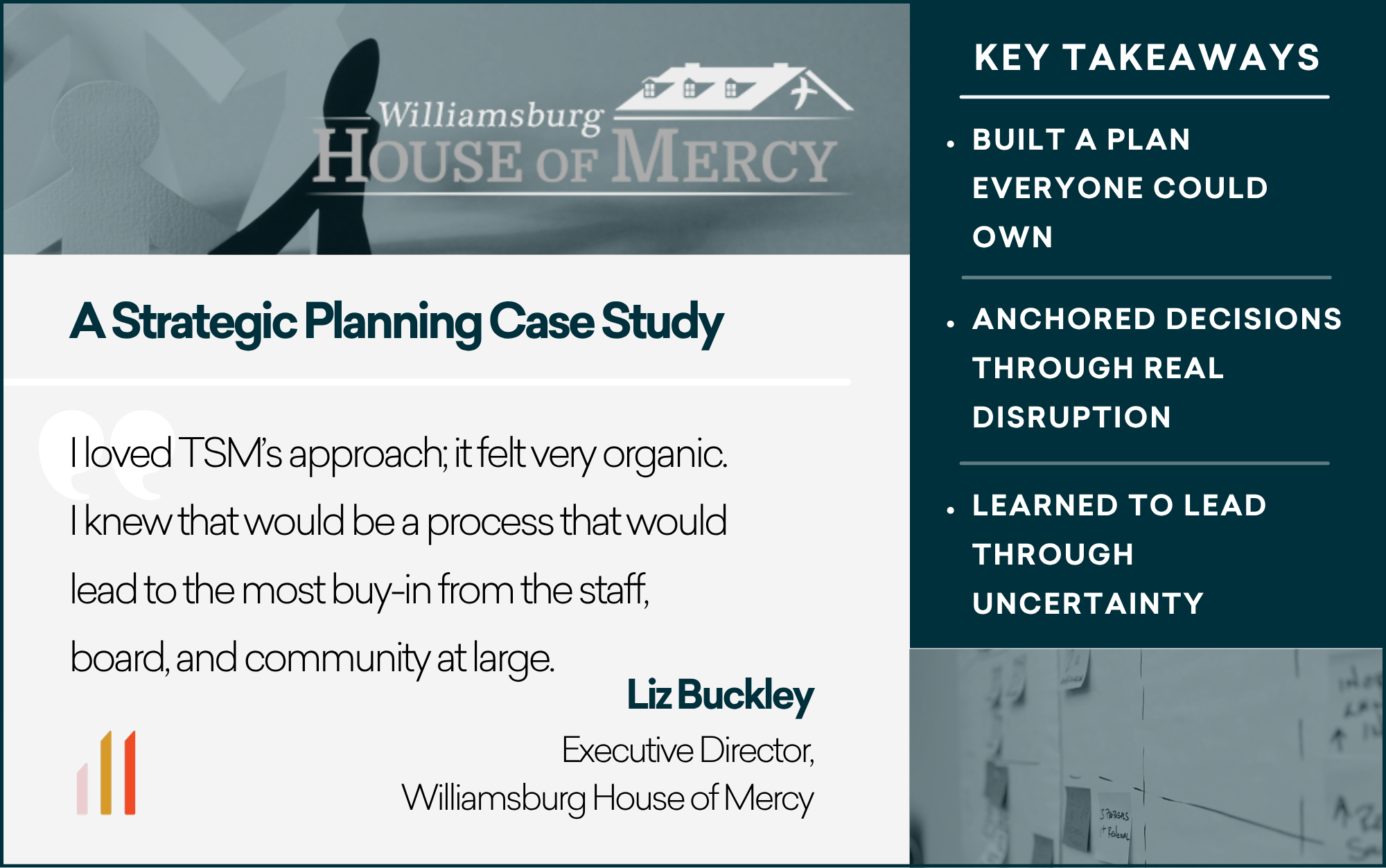
For more than 45 years, Williamsburg House of Mercy (WHOM) has provided food, day shelter, comfort, and hope to poor and precariously housed residents across Greater Williamsburg, Virginia. WHOM serves individuals and families in a community that expects a real say in the decisions that shape it. In 2024, Executive Director Liz Buckley made it a priority to develop the organization's first fully collaborative strategic plan, one sturdy enough to carry the important conversations about WHOM's future and hold up long after those conversations ended. WHOM turned to The Spark Mill for a process that could earn genuine buy-in from its engaged community and transfer that vision into something tangible the whole organization could implement. In August, we reconnected with Liz to reflect on the process, shortly after The Spark Mill helped facilitate a re-energizing retreat with staff a year into WHOM’s plan.
“I felt [The Spark Mill] was a safe space to be very honest about everything the organization had gone through, was going through, and where I felt pulled to lead the organization.”
Building a Plan Everyone Could Own
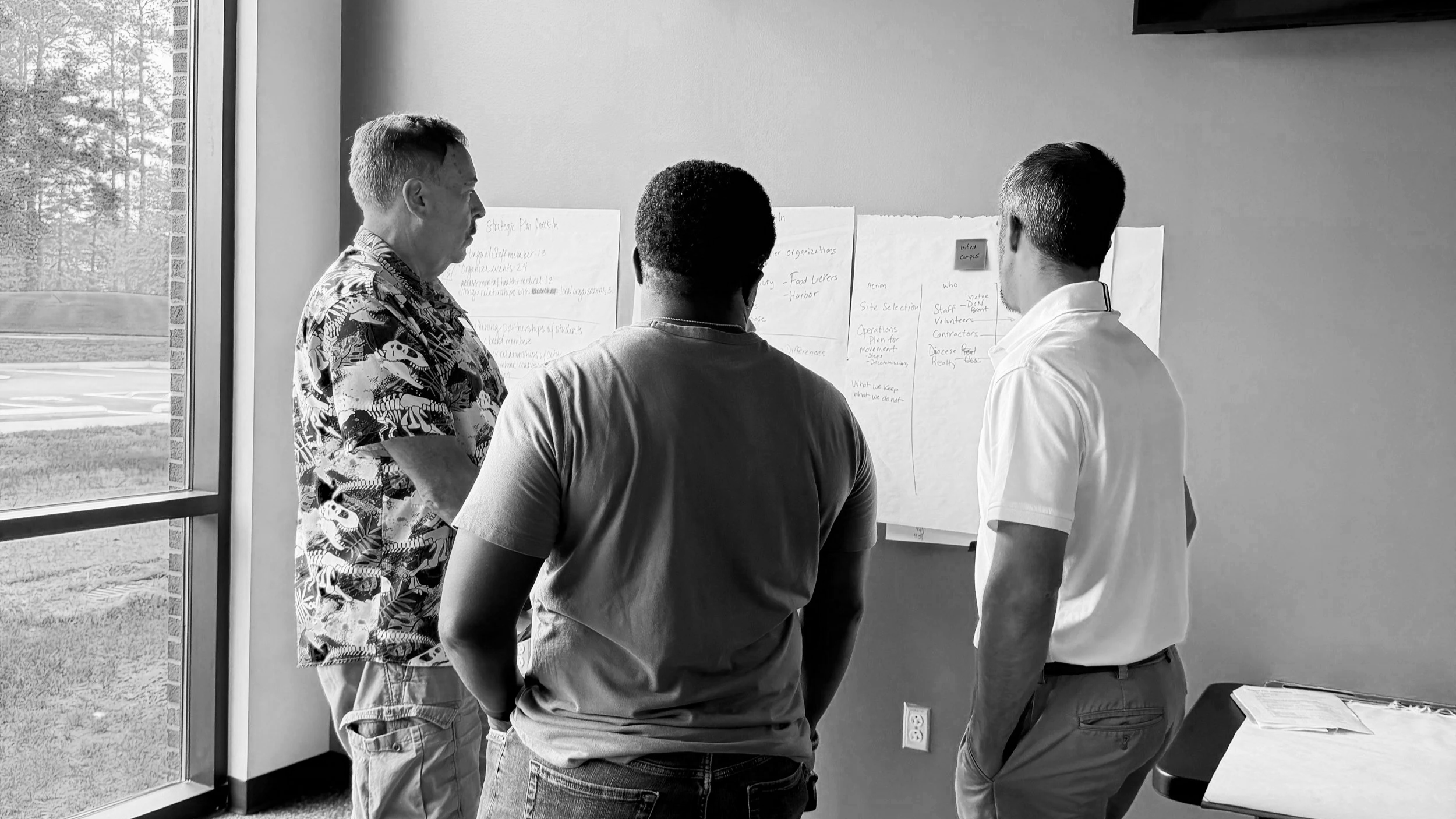
The Spark Mill's process — Gather, Soak, and Radiate — gave WHOM a structured way to collect input from staff, board members, and community partners before drafting a single goal. That breadth of input meant the plan reflected more than one department's priorities: by the time WHOM was ready to share it publicly, its closest partners had already seen their own input reflected in the final product. The approach was built to avoid a strategic plan authored by leadership alone and adopted by no one else. Ownership was distributed across the organization from the start, making everyone from staff to volunteers embedded in the collaboration.
“TSM really brings everyone to the table to have a voice and buy-in, so that it’s not just me. It was really meaningful for me to see that everyone shared the vision of the organization.”
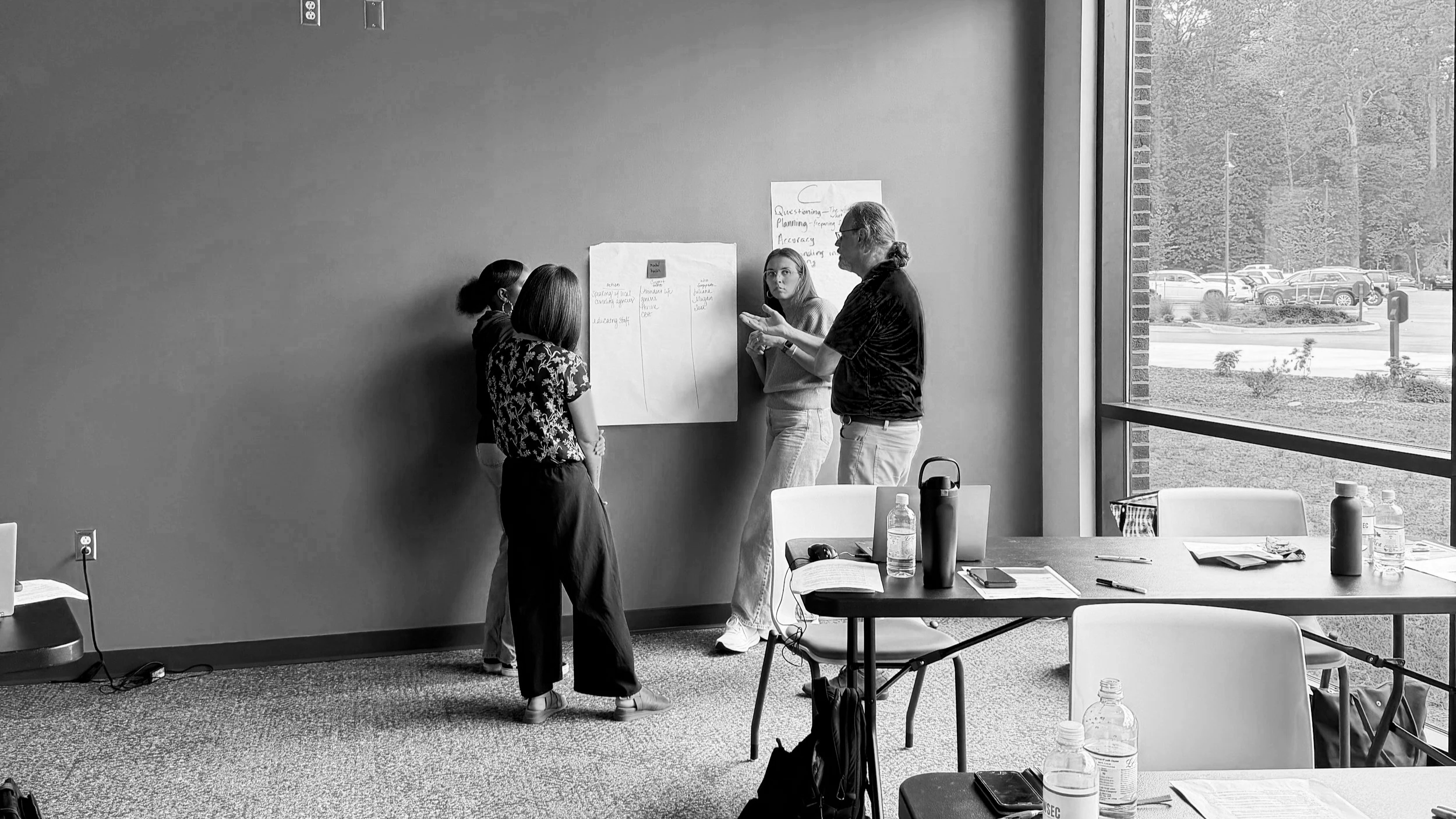
The process also surfaced a shift in direction WHOM might not have reached on its own. Buckley initially expected the plan to call for more in-house expertise, such as a dedicated mental health therapist hire. Instead, staff, board, and community discussions pointed toward deepening partnerships with organizations that already had that human services expertise. That kind of consensus extended across the plan's more difficult questions, where opinions converged more closely than anyone had expected going in.
“When we started to more purposefully partner with other agencies, there was a comfort and different level of trust that existed because they were sought out and seen as a peer.”
An Anchor Through Disruption
Shortly after finalizing the plan and assigning champions to each priority area, WHOM lost a federal funding source, resulting in a chapter of uncertainty and reduction of staff. Rather than shelve the plan indefinitely, leadership used it as the operating filter for every decision during the stabilization period; ideas that didn't align with its priorities were tabled. WHOM delayed its public rollout of the plan until July 2025, once the organization had phased out of the affected program and stabilized operations. From that point forward, plan alignment extended beyond crisis response, shaping how WHOM brought on the people who would help carry it out.
“Even with the best intentions you have to know how to pivot, and I think that plan helped everyone stay grounded and focused in an area of extreme turbulence...I don't know what would have happened without that plan.”
As WHOM stabilized, the plan's role shifted from an explicit decision filter to an operating norm. While leadership did not hold formal check-in meetings on the plan through 2025, prioritizing day-to-day stabilization instead, staff continued to reference its four priorities in their work without being prompted. That fluency is now built directly into onboarding: by the end of their first three months, new hires receive a roadmap drawn from the plan to guide their work. The result is an organization operating less reactively and more strategically, with a documented framework staff can apply to new challenges as they arise.
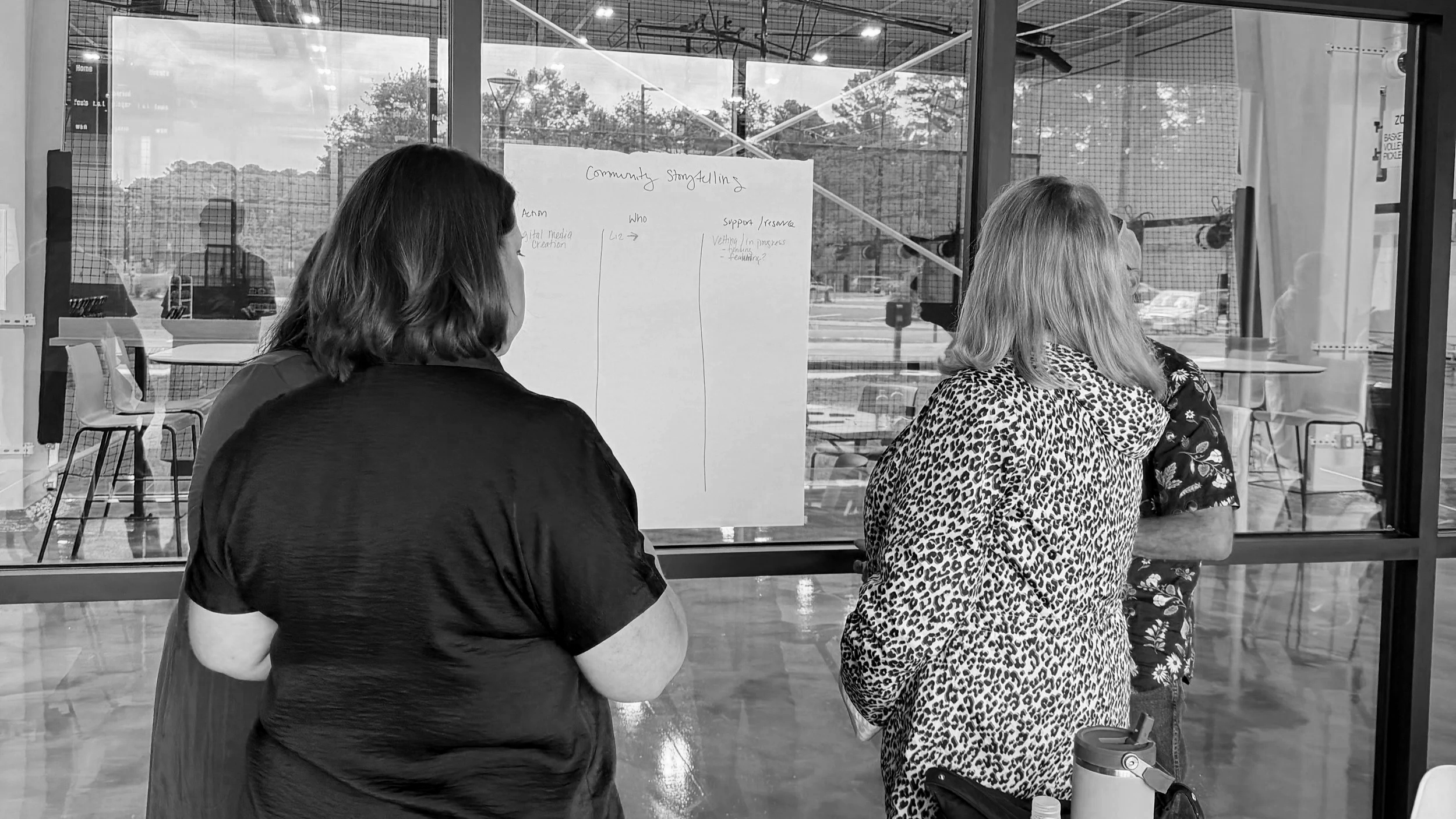
“We know all four points of our plan, we know what we need to do to get there, and it's just part of the staff’s being.”
From Lesson to Conviction
Buckley's biggest takeaway from the process extends beyond WHOM's own plan. In her view, change in a nonprofit is rarely optional, and organizations fare better when they already have a framework to make decisions by before disruption hits. And, that perspective didn't come from theory; it came from watching WHOM's own plan hold up as conditions shifted around it. For her, that experience underscored why a plan works best as a living tool leadership can return to.
“With most moments of forceful change, there is something brighter that comes out at the end of it.”
That conviction has become something Buckley advocates for well beyond WHOM. She sees a documented, broadly owned strategic plan as a baseline for a healthy nonprofit; not a nice-to-have, but the mechanism that lets an organization set direction with intention rather than reacting case by case. It's the difference, in her words, between leading with purpose and leading blindly.
“I feel very strongly if you want to be a healthy nonprofit, you really need to have a focus and buy-in from everyone in the community, staff, board, volunteer base.”
Looking Ahead
Today, Williamsburg House of Mercy is adding staff, rebuilding operating capacity, and applying a strategic plan that has already been tested under real conditions rather than left on a shelf. A recent staff retreat reinforced the plan's priorities across both new and long-time team members, giving the organization a consistent direction to carry into whatever comes next. For an organization whose work is designed to outlast any single leader's tenure, that consistency is a structural asset. WHOM now has a plan-driven operating framework built with input from across the organization, and one it can continue to apply as it grows.
“We have a solid framework that we can spring from and handle challenges differently than we did three years ago, before this was on paper...That strong foundation is something that can only be achieved when you have a strategic plan.”